Add this topic to your myFT Digest for news straight to your inbox
Chris Dodd sees chance Congress could pass legislation this year with bipartisan support
Retiring Admiral John Aquilino accuses Beijing of gradually raising pressure in South China Sea
Figures come day after US first-quarter growth data prompt investors to push back interest rate cut expectations
Move comes as Biden administration begins parcelling out funds unlocked by Congress this week
There were doubts the 2024 US election rivals would agree to the traditional televised face-off
Settlement resolves second of Berkshire Hathaway’s three big legal entanglements over the past year
While climate is changing, the model for insurance has not
The former president’s personal brand is a crucial part of his accessible appeal
As polls show the race tied, the president is campaigning around the country and his opponent is stuck spending his days in a Manhattan courtroom
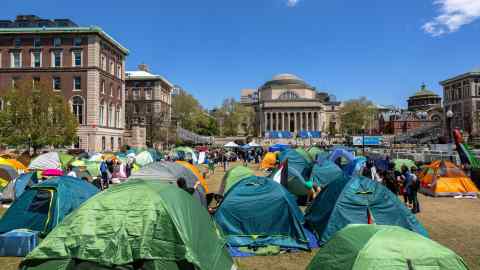
Politicians, faculty and students turn ire on veteran economist amid Gaza war demonstrations
Western policymakers ignore changing global power relations at their peril
Arrests in Germany and UK point to growing scale and ambition of Chinese espionage operations
Nobel laureate claims fall in inflation vindicates his position but global events challenge other views
Market Questions is the FT’s guide to the week ahead
US lenders are having to fight to keep depositors from leaving with no Fed rate cuts in sight
US and EU have raised alarms about Beijing’s plans to use manufacturing to boost lagging growth
Market expectations for loosening in Europe and UK pushed back as US grapples with a hot economy
Breaking USMCA would be ‘lose-lose’ scenario after Trump talks of blocking Chinese vehicles crossing border
Wall Street equities have recently bucked historical trend of moving inversely to greenback
Social practice — artists’ community-based work — is about exploring the world outside the white cube
Independent Art Fair’s curatorial adviser believes New York’s art market is still growing even during an industry slowdown
The fair arrives as galleries, braving a downturn, find new ways to collaborate. Also: interviews with artists Amalia Mesa-Bains and Charisse Pearlina Weston, a profile of gallerist Ales Ortuzar and much more
Ortuzar Projects represents only 14 artists, all with low US profiles
The combination of slower growth and nagging inflation is an unsettling mix
Also in this newsletter: US inflation higher than expected, panic on Wall Street, science round-up
Financial companies scramble to rework contracts and tie down personnel after US Federal Trade Commission rule
An aversion to trade in the US is not widely shared elsewhere
Research is finding ways to extend animal lifespans but regulators are still wary of treating ageing as a disease
Secretary of state’s trip to Beijing comes as tensions remain over Taiwan, war in Ukraine and tech export controls
With revenues having more than doubled since 2019, to $10bn, US pharma group targets painkillers
English-speaking countries generally do better at both attracting and integrating talent
It is high time we normalised conversations about money
Seoul’s industry minister says China’s grip on graphite threatens Inflation Reduction Act incentives
Washington urges Japan, South Korea and the Netherlands to tighten supply of tools and technology
Several justices appear sceptical of expansive reading but also question distinction between official and private acts
Head of Italy’s central bank highlights risk of US stance pushing up global borrowing costs
International Edition