Financial Times FT.com

Resources

Principal content

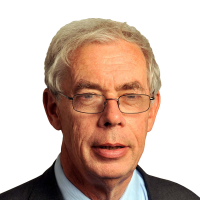
John Kay, columist

John Kay has been writing a column on economics and business since 1995. His academic career has included chairs at London Business School and Oxford University. He is a Fellow of the British Academy and the Royal Society of Edinburgh. He is currently a visiting professor at the London School of Economics. He also had a career in the policy world which established the Institute for Fiscal Studies as one of the most respected think tanks, and a business career in which he established, developed and sold a substantial consulting firm and in which he has been a non-executive director of Halifax plc and several companies.

John has published many books, including Foundations of Corporate Success (1993), The Truth about Markets (2003) and most recently The Long and the Short of It: finance and investment for normally intelligent people who are not in the industry. His new book, Obliquity, will be published by Profile Books in March 2010.

- -

Labour’s digital plan gets in the way of real progress

The Digital Britain report is the latest project driven by technological possibility rather than economic need or social value, writes John Kay

How the market proved no panacea for BT

The verdict must be that privatisation provided a route for the managed decline of a business whose historic purpose was disappearing, writes John Kay

Powerful interests are trying to control the market

‘Rent-seeking’ is found whenever economic power is concentrated – in the state, in large private business, in groups of co-operating and colluding firms. America has a new generation of rent-seekers: investment bankers and corporate executives, writes John Kay

Uncommon Sense

This compilation of essays from the blog of Gary Becker and Richard Posner covers a range of topical issues including gay marriage, terrorism and traffic congestion, says John Kay

Chaotic evolution defines the market economy

Markets are not a well-oiled machine: they are a constantly changing, adaptive biological systemn, writes John Kay

‘Too big to fail’ is too dumb an idea to keep

While regulators may be at fault in not having acted sufficiently vigorously, to say they caused the crisis is as ludicrous as saying that crime is caused by the indolence of the police, writes John Kay

True survivors do not clutch at straws

We are all inclined to believe we have more influence over events than we do. The answer is to maintain a sense of our long-term objectives while acknowledging the limits to our freedom, writes John Kay

How the skies proved the limits of regulation

The experience of the airline industry illustrates the phenomenon of regulatory capture – the tendency for regulators to see through the eyes of the industry they regulate, writes John Kay

Markets after the age of efficiency

If markets are informationally efficient, why is there so much trade between people who take different views of the same future? If the theory were true, the activities it purports to explain would barely exist, writes John Kay

Evolution is the real hidden hand in business

Large and complex corporations, like biological organisms, could only be the product of incremental change and adaptation. Their common essential characteristic is inexact replication, writes John Kay

Do not discount what you cannot measure

Everyday banking with no bill to the taxpayer

‘Tailgating’ in financial markets puts us all at risk

In magic or in markets, it is never rational to be wrong

Banks brought down by new Peter Principle

George Eliot wrote the book on moral hazard

First-class driving makes little economic sense

Dismal, yes, but economics flies off the shelves

What a carve up

True democracy is not just about taking part